
# Part Three: Headroom
## Chapter 7: The Peak of Laughter
Saeki was the one who suggested going to a rakugo show.
When Mizuno returned from the kitchenette during lunch, a flyer for a local performance was lying on his desk. The date was printed in red, and the performers’ names were listed vertically beneath it.
“Did you put this here, Saeki?”
“A client gave it to me,” Saeki answered without looking away from her monitor. “Do you like rakugo?”
“I don’t know much about it. But I’m free that day.”
“Does that mean I’m going too?”
“You like listening to sound. Wouldn’t it be interesting to record people laughing?”
Mizuno read the bottom of the flyer.
Photography and audio recording are prohibited inside the venue.
“Recording’s prohibited.”
“You’re right.”
“Then I’ve got no reason to go.”
“You could just listen normally,” Saeki said, then returned to work.
Mizuno placed the flyer at the edge of his desk. He did not throw it away when he left, and it stayed in a pocket of his bag until the date of the performance.
The venue was an old two-story building on a street one block away from the shopping arcade. The performers’ names were written beside the entrance in thick, stylized rakugo lettering. Even thirty minutes before the show, about ten people were already lined up.
“More people than I expected,” Saeki said.
“Maybe there are a lot of regulars.”
“Did you bring your recorder?”
“I did, but I’m not taking it out of the bag.”
Instead of inside his jacket, it was at the bottom of his bag that day. There had been no need to bring it, but out of habit he had put it in with the rest of his things before leaving home.
At opening time, the wooden door was unlocked, and they paid the admission fee at the reception desk.
At the front of the room, which held fewer than one hundred seats, there was a low stage, a cushion, and a small reading stand. That was all the scenery. Mizuno and Saeki sat slightly behind the center.
The audience included elderly couples, men and women who looked as though they had come after work, and younger people alone. In the front row, people who seemed to know one another exchanged greetings. Candy wrappers rubbed together. Coins dropped into a box at reception. As more people entered, conversation, throat-clearing, jackets being removed, and programs opening overlapped, creating a single field of sound before the performance had even begun.
Mizuno almost reached for his bag, then returned his hand to his knee.
Without a recording, any sound he missed would not remain. Perhaps because of that restriction, even smaller sounds felt closer than usual.
At the scheduled time, the house lights dimmed slightly. Conversation receded, and the flute and drum of the entrance music began. The sound system did not seem new. The sound was a little hard and did not spread far, but it was enough to turn the whole audience toward the stage.
The opening performer bowed and sat on the cushion.
A small laugh came from the front row at his first words. One person let out a short breath, and the laughter spread around them a little later. Some people moved only their shoulders without making a sound.
When the storyteller stopped speaking, the audience waited for what came next. At times, the silence gathered the attention of an audience of fewer than one hundred more completely than the speaking did. The moment the next line was placed, laughter rose and disappeared shortly afterward.
The recorder display appeared in Mizuno’s mind.
Small sounds continued. A pause formed. Then the volume jumped. Laughter also had a beginning, a length, and a way of disappearing.
When the opening performer left the stage, applause spread through the room. It was loud but did not last long. By the time the next entrance music began, the audience was quiet again.
The second storyteller spoke more slowly than the opening performer. His voice was only loud enough to reach the back, not especially forceful. But whenever he turned his face, the position of the voice changed with it, and it sounded as though one person stood on the right and another on the left.
There were no props or scenery, yet a room and a street appeared inside Mizuno, with two people facing each other.
Saeki laughed beside him. It was a short, slightly high sound he never heard in the office.
Mizuno did not turn toward her. He listened as her laugh joined the laughter spreading from the front. The sound passed through the center, swelled toward the back a moment later, and disappeared before the next words arrived.
After an intermission, Asanoya Ichifune came onto the stage last.
His name had been printed larger than the others at the bottom of the flyer. When he bowed in front of the cushion, the applause lasted longer than it had for the first two performers.
Ichifune sat down and looked across the audience. He did not begin immediately. He waited until someone in the front row adjusted their seat and someone else swallowed a cough, then opened his mouth.
He began with a construction site he had seen on the way to the venue.
An elderly woman asked a security guard holding a traffic baton for directions. When Ichifune imitated the guard’s reply, several people laughed. The laughter spread a little when the woman asked again. On the third exchange, altered only slightly, the whole room finally moved.
He did not try to push the first small response wider with extra words. Without breaking the shape of the exchange, he moved down the same road a little at a time until the audience could see the guard and the woman.
When the laughter grew, Ichifune did not place the next line over it. He waited. Just before it disappeared completely, while some of it still remained in the room, he set down another line. A different laugh began and spread as if following the previous sound.
He was not raising his voice or adding more explanation. He seemed to be measuring where each line would reach the audience and placing them one at a time.
When the story entered its main section, the stage changed into a cramped row house.
In reality, there were only Ichifune and the cushion. But every change in the angle of his face or the tone of his voice added another person: a landlord, a tenant, a man from the neighborhood, a strong-willed wife. Ichifune had only one body, but there were many people in the room.
After a large laugh, the story suddenly entered a quiet place.
As one of the characters, Ichifune placed a short phrase in a small voice. The audience that had been laughing stopped moving, and somewhere someone drew a breath.
For just a moment, the character they had been hearing as part of the joke looked like a lonely person.
Ichifune did not hurry to fill that quiet with laughter. When he moved to the next line, the character recovered his foolishness, and the audience laughed again. But it was not the same laugh as before. The loneliness they had just seen remained alongside the humor.
Again and again, Mizuno watched a meter in his mind.
Ichifune’s voice was not pressed against the upper limit, and the room was not constantly in an uproar. A quiet followed a small laugh. Surprise or another feeling emerged from it, and then the room returned to louder laughter.
There was still a range in which the audience’s feelings could move.
As the story approached its end, the words came slightly faster. Characters who had occupied separate places gathered in one location, and pieces of the story that had been set apart overlapped in a short span of time.
Ichifune delivered the final line.
The audience’s laughter rose all at once.
There was no front or back. It became one large sound and struck the ceiling. In Mizuno’s mind, the meter jumped close to the red line.
The laughter did not settle immediately.
Ichifune added nothing. He remained seated and waited. Eventually the laughter became applause. When he lowered his head, the applause grew louder still.
Mizuno clapped too. There was a lightness around his chest that had not been there when he arrived.
His problems had not been solved, and his work had not decreased. But it was not simply that he had forgotten them while laughing. Something remained that he felt he might be able to carry home after leaving the room.
After the show, the audience stood without rushing. People in the front row who seemed to be regulars discussed the stories where they were.
Saeki put the program in her bag.
“That was interesting.”
“Yeah.”
“From about halfway through, you were laughing with a difficult expression.”
“Which was it?”
“You looked like you were measuring something.”
They followed the flow of people into the hallway.
A little away from the others, Mizuno checked the stub of his admission ticket.
He had paid before entering the room. The amount had not made him hesitate. He had not thought it was high, and he had not chosen the event because it was cheap.
At that price, he could try it once.
That had been about the extent of his decision.
Now, however, he was trying to take home not only laughter but long silences, sympathy for people he had never met, and words that might remain with him on the way home.
“Is it like the 300-yen zine?” Saeki asked.
“In some ways.”
“Consumer surplus?”
“That’s part of it, I think.”
They followed the other customers down to the first-floor lobby. Beyond the glass doors, signs outside restaurants were lighting up, and a bicycle passed in front of the entrance.
Mizuno took the recorder from his bag.
“You didn’t record anything, did you?”
“I didn’t.”
He turned on only the power. Two level meters appeared on the dark display. The green bars moved low in response to the sound of cars outside.
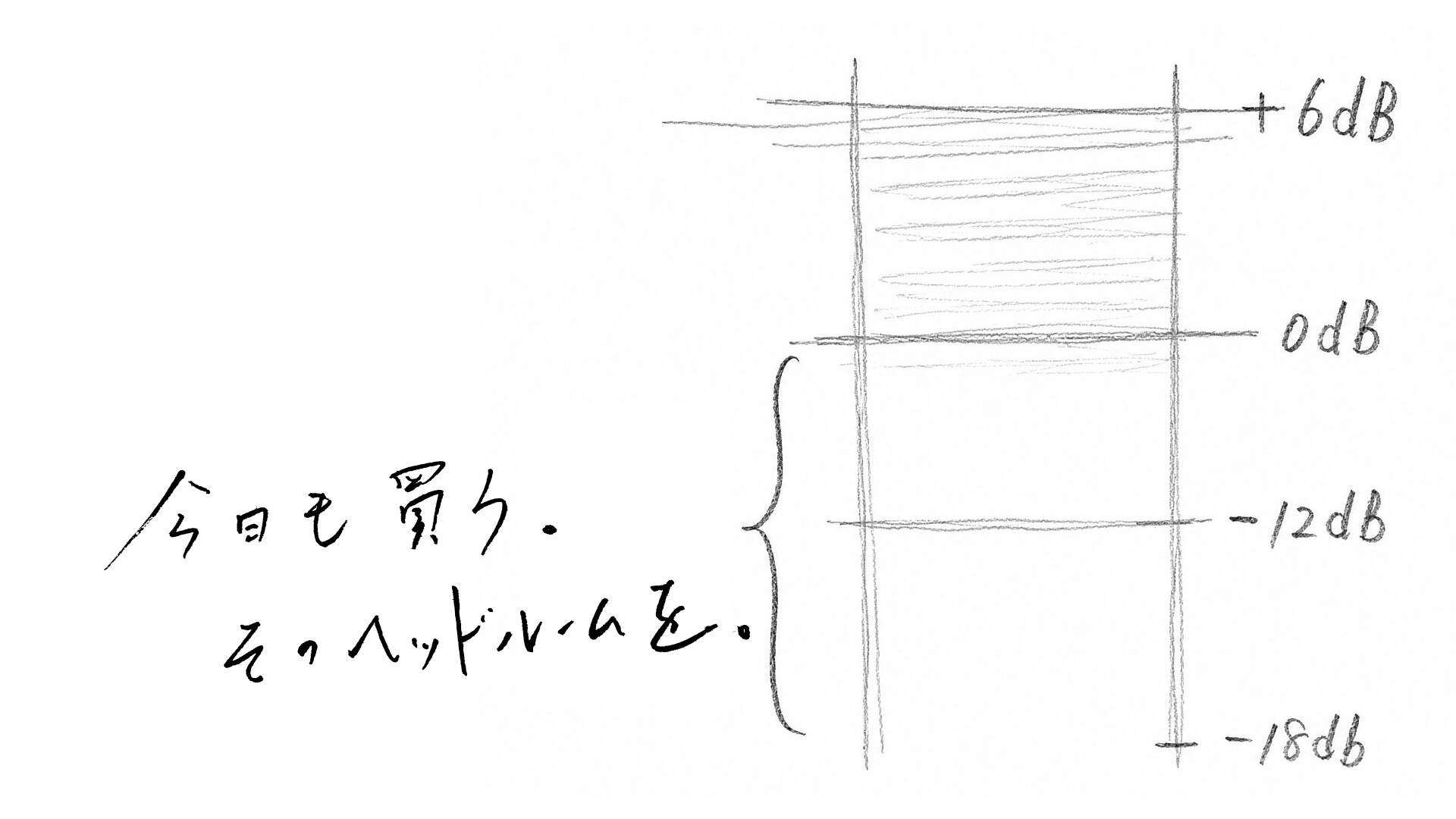
“When you record, you leave room at the top so a sudden loud sound won’t be crushed.”
“The thing you were talking about in the shopping arcade?”
“Right.”
Mizuno pointed to the upper part of the meter.
“The range left here is called headroom.”
“Headroom,” Saeki repeated.
“A room above your head?”
“I suppose that’s what it would mean literally.”
Mizuno turned off the power. The screen went dark, but the way the laughter had moved remained with him.
“Paying felt close to that.”
“There was room left in the admission fee?”
“Yeah. When I paid, the meter didn’t swing all the way to the top.”
Upstairs, the audience area was being cleared. The faint sound of chairs moving reached them from the stairway.
“But the experience nearly reached the peak at the end.”
Saeki did not answer immediately.
Several people heading toward the exit passed beside them. One imitated a line from Ichifune, and the other two laughed again.
The performance was over, but the laughter was still moving among the audience.
Mizuno opened his notebook beside the lobby wall.
The payment meter still has headroom.
And yet the experience meter moved that far.
Below it, he wrote a single word.
Headroom
Giving it a name did not tell him what the word could be used for.
Something that had remained without taking shape since the night he finished the 300-yen booklet had finally fit inside a word.
← Previous: Chapter 6 — Looking for Cheap Things

Back to the English Contents

Next: Chapter 8 — Watch the Customer. Do Not Let the Customer Decide. →

この章を日本語で読む