
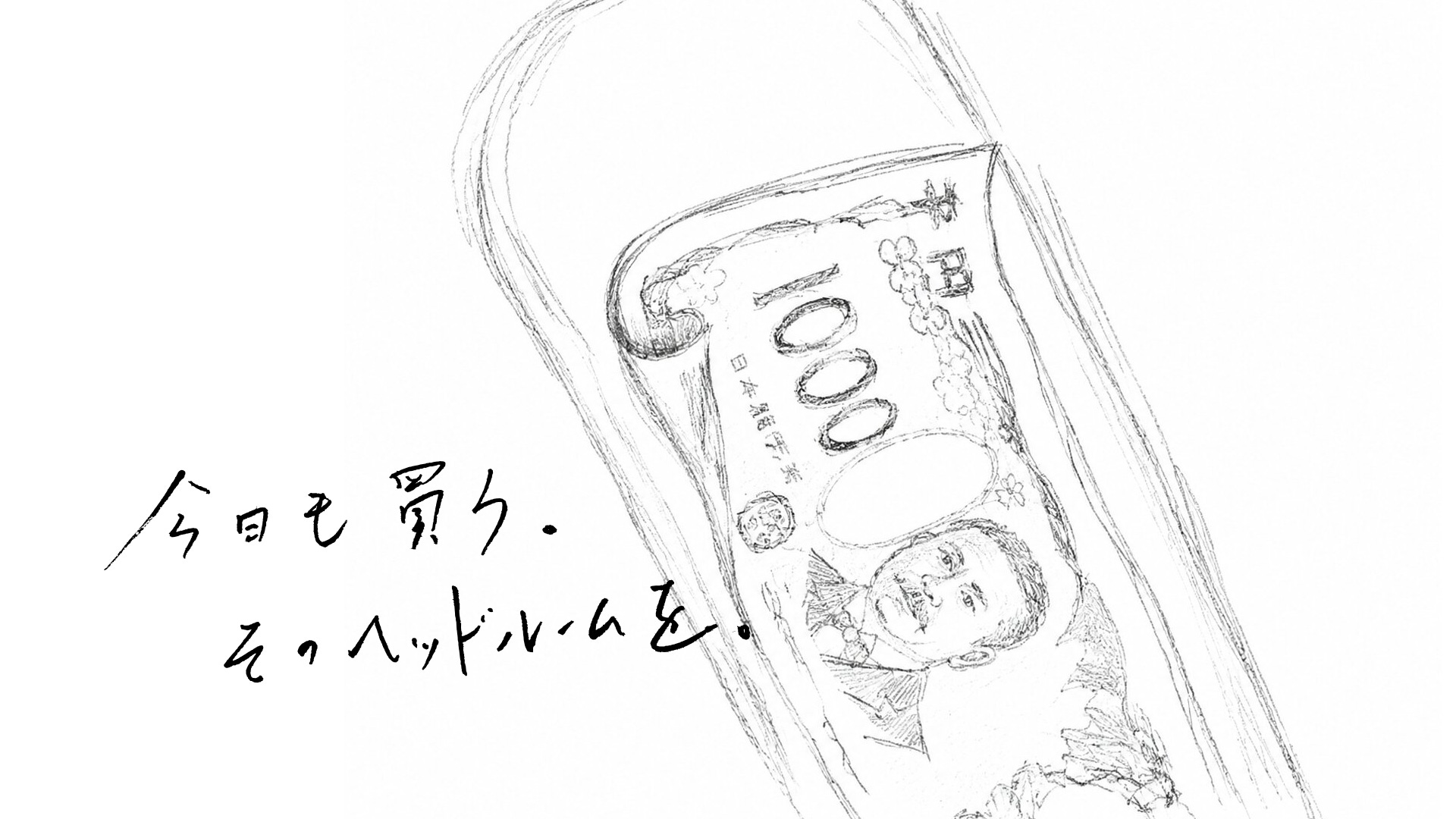
## Chapter 6: Looking for Cheap Things
Mizuno was looking at the two vertical lines in his notebook.
“Payment” was on the left and “experience” on the right. For Kubo’s booklet, the mark on the payment line was low, and the mark on the experience line was higher. Beneath them were the words he and Saeki had written the day before.
Close to consumer surplus.
But not only that.
The explanation had moved forward a little, but another doubt had occurred to Mizuno.
A 300-yen booklet. A 450-yen coffee. He had also liked the 1,000-yen Geisha, but the two purchases he had kept thinking about lately were the ones with the smaller payments.
When the price was low, he did not have to brace himself before buying. If it did not suit him, the amount he lost was small. Maybe he was simply mistaking that sense of safety for the size of the value he received.
Mizuno wrote in the margin of the page:
Do I just like cheap things?
Once he wrote it down, it seemed entirely possible. He added another line.
Choose cheap things deliberately.
At lunch that day, Mizuno went to a standing soba shop near the office.
The plain soba he selected from the ticket machine outside cost 390 yen. There were no chairs inside. Customers stood facing narrow counters along the walls. When he handed over his ticket, the employee checked the number, and the soba came out in less than a minute.
He took his own chopsticks and water and carried the empty bowl to the return counter when he was done. The soba was hot, and the broth was strong. He did not think it was especially good, but he had no complaints, and fewer than fifteen minutes had passed between leaving the office and leaving the shop.
When he returned the bowl, the employee thanked him briefly. As Mizuno stepped outside, the next customer moved toward the ticket machine.
390 yen. Cheap and fast. The customer had to do several things, but that was clear before entering. On a day when he was in a hurry, he might use it again.
But it did not leave the feeling he had after finishing Kubo’s booklet.
The payment was small, and what he received stayed within what he had expected. There was nothing wrong with that. The shop had handed him the lunch he needed in a short amount of time, just as it was.
The next day, Mizuno had to print product handouts for a small business meeting. He could have used the multifunction printer in the office, but he wanted slightly thicker paper and one hundred copies in color.
An advertisement appeared at the top of the search page.
One hundred color copies from 500 yen.
At five yen per sheet, it looked cheaper than printing them in the office, so Mizuno opened the site.
After he selected flyer printing, a sequence of screens asked him to choose the paper size, single- or double-sided printing, paper type and weight, turnaround time, number of colors, and packaging method. The 500-yen price applied only to the thinnest paper with shipment in ten business days. Selecting the thickness he wanted raised the price to 800 yen. Changing the shipment to three business days later raised it to 1,200 yen. Shipping and payment fees were then added.
A note at the edge of the screen said that delivery times were not guaranteed if there were problems with the submitted data.
When he uploaded the file, a warning appeared:
Bleed has not been set.
The handout had white margins, and he did not intend to print color to the edge of the paper. Mizuno selected “Continue as is,” but the next warning said that the fonts might not be embedded.
He had already converted the document to PDF, but he reopened the original file to check how it had been saved and exported another PDF. When he uploaded it again, a new warning said that the product image was below the recommended resolution.
The image was clear enough for the business meeting, but apparently it might look rough after printing. Mizuno searched for the image again and replaced it.
Forty minutes had passed since he first opened the advertisement.
“Are you still submitting that file?” Saeki said from beside him.
“I thought I’d found a cheap printing service.”
“How much?”
“500 yen in the ad.”
“And now?”
The total on the order screen was 2,180 yen.
“Wouldn’t it have been faster to print it here?”
“Don’t tell me that now.”
“If you include your labor, it’s already expensive.”
Saeki said nothing more and returned to her work.
Mizuno could have stopped and gone back to printing in the office. But he had begun to feel that he did not want the time he had already spent to go to waste, so he completed the order.
After he paid, an email arrived confirming receipt of the data. Ten minutes after he thought it was over, another email came.
The subject line read:
[Action Required] Regarding Your Submitted Data
Part of an image was close to the print boundary and might be cut during trimming. If he wanted to correct it, he would need to resubmit the file. If he wanted them to proceed as is, he needed to reply with his approval.
Mizuno counted the things he had taken on in order to print cheaply. Choosing the specifications. Reading the warnings. Rebuilding the file. Replacing the image. Deciding whether each warning was a problem. Finally, replying to an email.
In exchange for being able to order without speaking directly to an employee, much of the judgment had moved to Mizuno’s side.
Looking only at the amount, it might still have been cheap for outsourced color printing. But the payment had not felt light.
Had he ordered correctly? Would it arrive on time? Would the image be cut? Even after the payment was complete, a small tension remained.
For the next several days, Mizuno continued buying things with cheapness in mind.
At a shop near the station, he bought a discounted folding umbrella. The first time he used it in the rain, the handle wobbled slightly, and the joints of the frame made a sound whenever the wind blew. As an umbrella, it kept the rain off. Even so, because he expected it might break, Mizuno held it with more force than necessary.
On another day, he used a delivery service with a low introductory rate. The product prices were low, but he had to add one thing he did not need in order to reach the minimum order. The delivery window was broad, and he could not go out until the package arrived.
When he accepted the products at his door, Mizuno could not tell whether he had gained anything.
Of course, some cheap things were useful. The standing soba shop had given him the lunch he needed in a short time. The folding umbrella still performed the job of keeping off the rain. The printed handouts arrived on the morning he needed them, and all one hundred copies were neatly finished.
There was nothing wrong with being cheap itself.
But a low price did not guarantee that something good would remain after payment. Work, anxiety, judgment, and the expectation that something might break could be pushed outside the price tag. Sometimes the amount alone looked small because the customer took on that burden.
When Mizuno bought Kubo’s booklet for 300 yen, little work had been required of him as a reader. At Yoshioka’s shop, after paying 450 yen, he had not needed to worry about his order or the operation of the shop.
Those two purchases had not only been low in price. They had not left anxiety outside the payment.
That weekend, Mizuno was organizing audio files he had recorded at home.
As he checked the dates and locations and moved unnecessary files into another folder, he found a recording from several years earlier made on a riverbank. It contained the evening wind and a train running in the distance.
When he played it, the sound was quiet.
As he raised the computer’s volume, the train became audible. At the same time, a low noise also grew louder, and a steady hiss began filling his earphones.
When he made the recording, Mizuno had been afraid of a sudden loud sound and set the input too low. The train did fit within the recording. But the wind and grass he had actually wanted to hear were also too quiet. If he tried to raise them afterward, the noise rose together with the sounds he needed.
Mizuno stopped playback.
Lowering the input did not make a recording safe. Recording quietly and leaving room were different things. He did not want to listen again to a recording that had lost even the sounds it needed.
He opened his notebook and wrote briefly on the page after his notes about Kubo’s booklet.
It is not cheapness.
After thinking for a moment, he added another line.
Keeping what is needed, while still leaving room to receive more.
Mizuno put down his pen.
On the computer, the riverbank recording remained paused. The waveform on the screen was small, with a wide space above it.
But that space was not receiving anything.
← Previous: Chapter 5 — Consumer Surplus

Back to the English Contents

Next: Chapter 7 — The Peak of Laughter →

この章を日本語で読む