
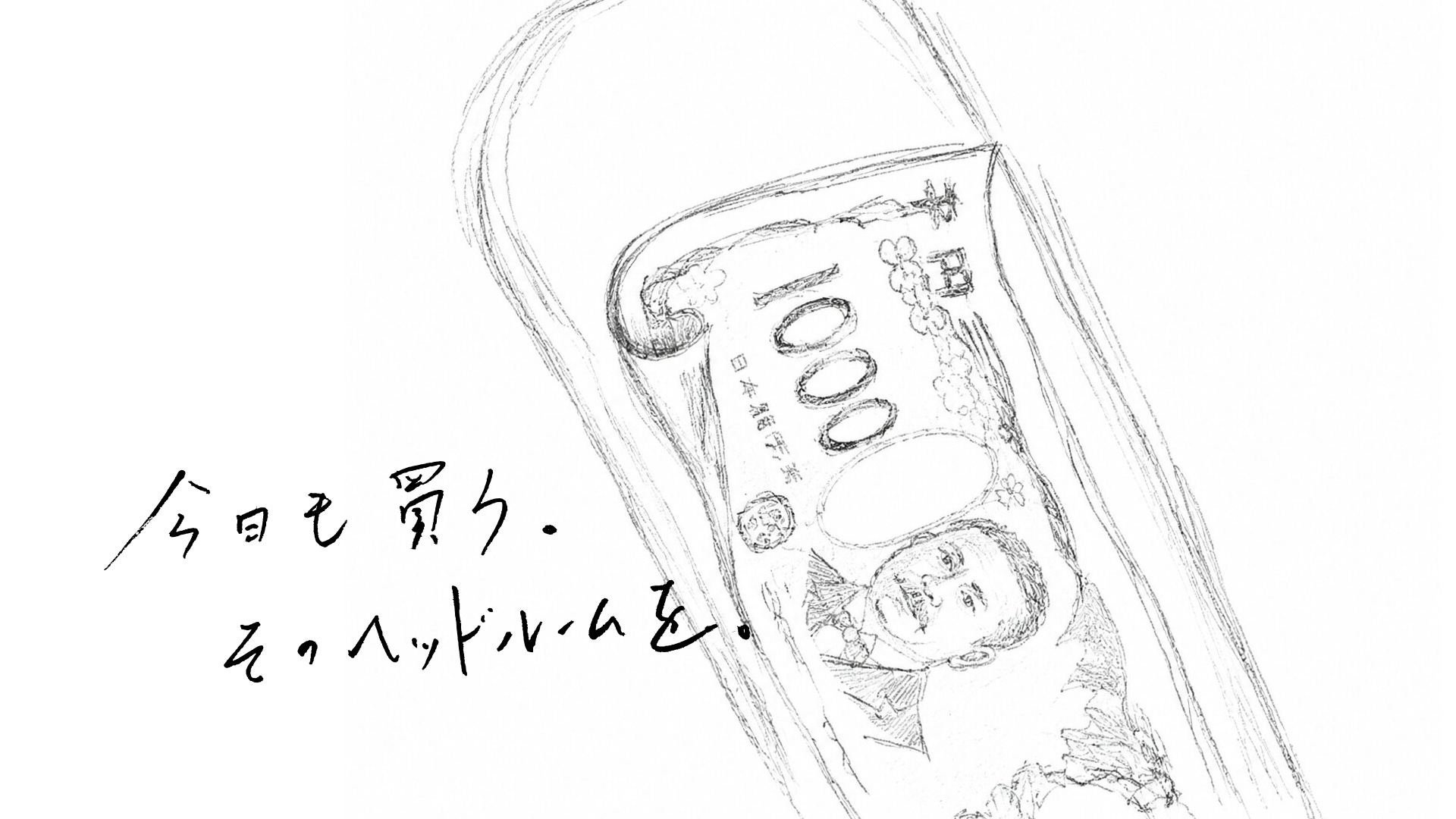
## Chapter 5: Consumer Surplus
When Mizuno arrived at the office the next morning, Nao Saeki was already working across two monitors.
The previous month’s sales by product were open on the left, and a list of inquiry details was open on the right. Saeki kept entering data while checking how the numbers corresponded to the written comments. While waiting for his computer to start, Mizuno opened his bag and took out *Between Transfers*, which had bent slightly between the thick photo book and its backing board.
The white cover looked plainer in the morning office than it had at the venue the day before.
“What’s that?” Saeki asked without stopping her typing.
“A booklet I bought yesterday.”
“A book?”
“A zine.”
“You’re someone who buys zines, Mizuno?”
“What’s that supposed to mean?”
“I thought you only recorded things on your days off.”
“Don’t make me sound like someone who does nothing but record.”
Saeki laughed. Mizuno placed the booklet on his desk and started work. There were more than ten unread notifications in the company chat: revisions to a specification sheet for a client, a request from sales for product images, and a change to a meeting time.
He replied to two and opened the third when Saeki asked, “Was it interesting?”
“It was.”
“What was it about?”
“Stations. People you see on trains.”
“That’s all?”
“That’s all.”
“Was the writing good?”
Calling it good would not have been wrong. But that alone did not explain why the absent man and the station where the woman had no plans remained after he finished reading.
“It felt like he was writing about things I’d seen but hadn’t looked at.”
“I think I understand, but I’m not sure.”
Mizuno picked up the booklet.
“It was 300 yen.”
“That’s cheap. Is that why you bought it?”
His acquaintance had said the same thing the day before.
“I might not have bought it if it wasn’t 300 yen.”
“Then it was the price.”
“It was the price, but—”
Saeki organized things quickly. If the question was only why he had made the purchase, her answer was correct. But Mizuno had not wanted to talk only about his hesitation before buying it.
A multifunction printer started running at the back of the office. The rollers fed the paper, and the first and second sheets came out with a pause between them. Beyond that steady operation, the time when he had gone one station too far and opened the first piece again on the opposite platform came back.
“It felt like there was still something left after I paid the 300 yen.”
“Of course the booklet was left.”
“I don’t mean the object.”
“What stayed with you after reading?”
“That’s close too.”
“It was more interesting than the price?”
“You could put it that way, but it wasn’t like I received 300 yen’s worth and that was the end of it.”
If it had been something that happened in front of him, it would have been easier to describe. A metal sign fell. The aroma of coffee changed as it cooled. He sat for fifteen minutes for 450 yen.
But what remained after payment had no shape and no unit.
After thinking for a moment, Saeki opened a new screen on the right-hand monitor.
“If there’s a term for it, I think it’s close to consumer surplus.”
“Consumer surplus.”
He had heard the term before. Maybe it had been in company training materials, or in a class at university, but he had never connected it to his own purchases.
“It’s the difference between the amount a buyer would have been willing to pay and the price they actually paid.”
“For example?”
“Say you would have paid up to 500 yen for that booklet, but you bought it for 300.”
Saeki wrote 500 yen and 300 yen on a sticky note and connected the two numbers with a line.
“This 200 yen is the surplus left on the consumer’s side.”
Once it became numbers, he felt as though he understood. If he were comparing two products at work, a line with a length was easier to handle.
But where was the amount he had actually been willing to pay?
“When is the amount you’re willing to pay decided?”
“Before you buy, I suppose.”
“But I didn’t know the contents before I read it.”
Saeki did not answer immediately.
“That’s true.”
“It wasn’t that I thought it had 500 yen of value before I bought it. I bought it because at 300 yen, it would have been all right even if it didn’t suit me.”
“After you read it, did you think you would have paid more?”
“I did.”
“Then you can say there was surplus in the end.”
“Probably.”
Saeki placed the sticky note showing the 200-yen difference on Mizuno’s desk.
He understood the idea. If he bought something for less than the amount he would have paid, he had gained something, and that applied to the booklet from the day before.
There was something that did not fit inside the line.
“Suppose I would have paid 500 yen.”
“Yes.”
“If I’d bought it for 500, would I have felt the same way yesterday?”
“The surplus would approach zero.”
“But the writing after I read it would be the same.”
“Yes.”
“What I received would be the same, but paying would feel different.”
Saeki drew another circle beside the sticky note.
“Do you want to think about price and experience separately?”
“Not exactly separately. It feels like there are two meters.”
At the edge of Mizuno’s desk was the recorder he had not returned to his bag after the previous week’s recording. He picked it up without turning it on and pointed to the edge of the black screen.
“One is the meter when you pay. At 300 yen, it doesn’t swing very high. If I buy it and it doesn’t suit me, I can think, well, that’s all right.”
“The psychological burden.”
“The other is the meter after reading.”
“Satisfaction?”
“Discovery. What lingers afterward. Wanting to read it again. This one swung farther than I expected from 300 yen.”
The office phone rang, and someone in sales answered with the company name. As voices overlapped the sound of the multifunction printer, Saeki drew two vertical lines on another sticky note.
“Payment” on the left. “Experience” on the right.
She marked the payment line low and the experience line higher.
“Like this?”
“Close.”
“If you wanted to compare it as consumer surplus, I suppose you would eventually convert the experience side into money too. In the form of how much you would have been willing to pay.”
“Is that the usual way?”
“Numbers let you compare across products and people.”
For Saeki, numbers did not reject feelings. They were tools for putting things described by different people on the same desk.
At the same time, the word “experience” on the right had not yet become an amount.
“But the difference in price itself may not be what’s bothering you.”
“What do you think it is?”
“I don’t know yet.”
She did not speak as though she knew the answer.
“Can I borrow the booklet?”
“Now?”
“I’ll start it at lunch. I’m not working from home today, so I can continue on the train back.”
Mizuno handed it to her. Saeki opened only the first page, then closed it at once.
“I’m working.”
“You’re serious.”
“You’re the one who started talking to me.”
The thin booklet was placed on top of the sales-performance documents beside her computer.
Mizuno wrote the date on a new page of his notebook and recorded the term Saeki had given him.
Consumer surplus
After leaving a little space, he wrote:
The difference between the amount one is willing to pay and the actual price
Below that, he drew two lines labeled “payment” and “experience.” He put a low mark on payment and a high mark on experience.
The explanation had moved forward, but something was still missing.
At lunch, Saeki took the booklet to the break area. Mizuno remained at his desk and opened a revision request that had arrived that morning.
The screen showed a proposal for product packaging. Thicker paper than the current product. Gold lettering. Additional explanatory copy. In the upper-right corner was the word “Premium.”
The message from sales said:
We want the appearance to communicate added value so we can raise the price.
It did look more expensive. The printing and packaging costs would rise as well. Mizuno began to wonder whether buyers wanted it, but the task he needed to handle then was something else, so he closed the screen.
Just before one, Saeki returned and placed the booklet on Mizuno’s desk.
“How was it?”
“I didn’t miss my stop.”
“I see.”
“But it was interesting. At 300 yen, I think I’d buy the next one if I saw it.”
“What about 500?”
“I probably would.”
“1,000?”
Only then did Saeki take slightly longer to answer.
“Yesterday, no.”
“Now that you’ve read it?”
“Depends on what the next one is about.”
Even after reading the same writing, Mizuno and Saeki had not moved in the same way. Saeki had not missed her station and had not received every piece with equal force. Even so, compared with the day before, when she did not know Kubo’s writing, there was now a greater chance she would pay for the next booklet.
“So it still isn’t decided by the amount alone,” Saeki continued as she returned to her seat. “Whether you know who wrote it. Whether you’ve read them before. How long it is. Whether it’s what you want to read now. Even for the same person, the amount they are willing to pay changes with the conditions.”
Until the day before, Kubo had been an unknown writer. Now Mizuno had read seven of his pieces. The next time he saw the name, he would be able to predict the contents better than he could yesterday.
Even at the same 300 yen, a second payment would not be the same as the first.
“Does that count as surplus too?”
“Trust?”
“The feeling that I could buy the next one too.”
“In a broad sense, it would count as value. But if you divide things using consumer surplus alone, it sounds like a separate variable.”
Her answer was more cautious than it had been that morning.
Mizuno returned to his notebook and wrote beneath the two lines:
Room remains in the payment.
The experience goes beyond what the price led one to expect.
Then he added:
Close to consumer surplus.
But not only that.
Mizuno put down his pen.
It did not have a name yet.
Even without a name, what had remained since yesterday did not disappear.
← Previous: Chapter 4 — A Stranger’s Attachment

Back to the English Contents

Next: Chapter 6 — Looking for Cheap Things →

この章を日本語で読む