
# Part Six: Moving It into Work
## Chapter 13: A Plan That Reduces Added Value
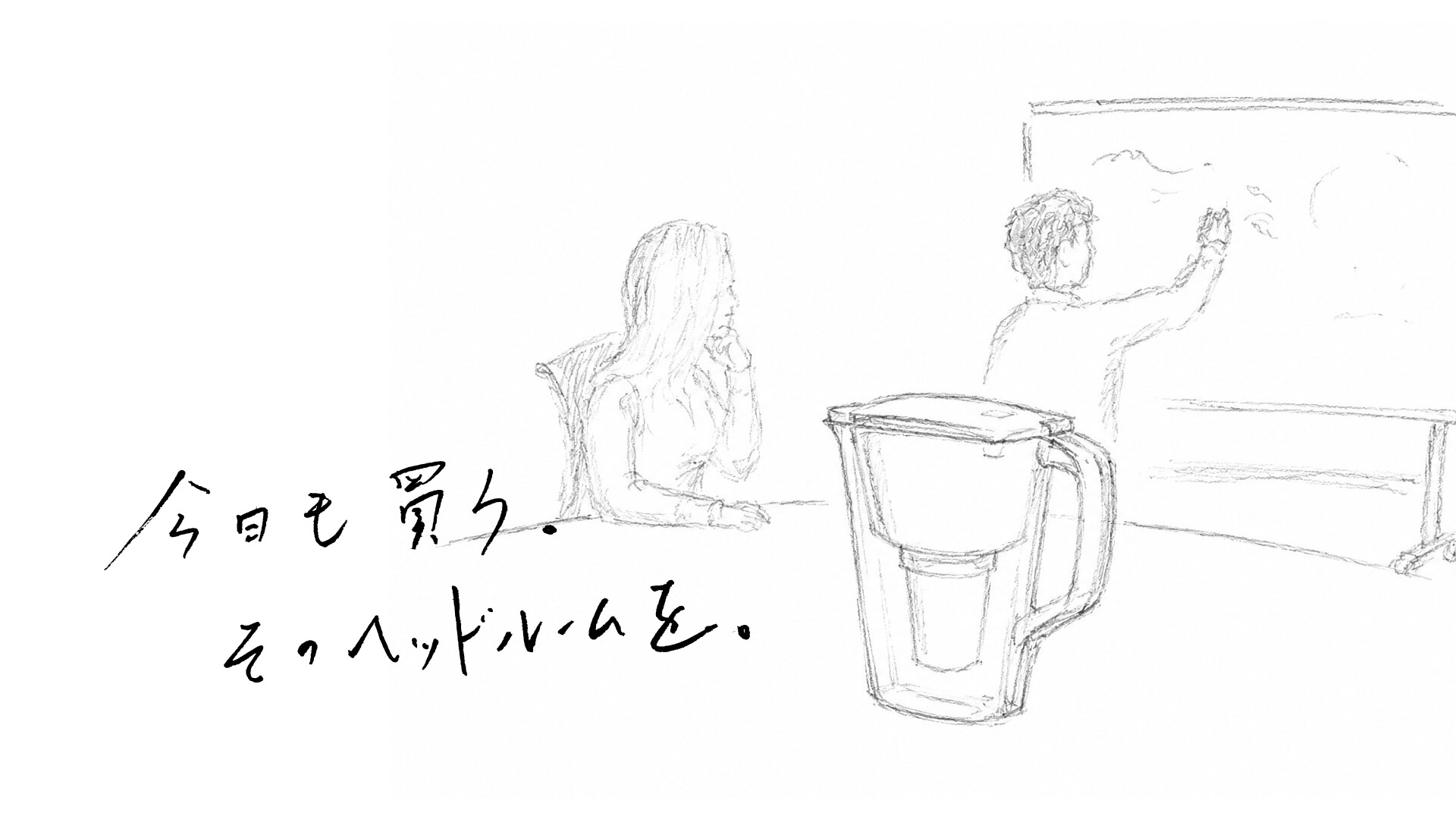
Three water-filter pitchers stood in the center of the meeting room.
The first was the current product, with a clear plastic body and a white lid. The second was a prototype with a heat-resistant glass body, a metal lid, and a thick handle. The third was only a visual mock-up. In the center of its black lid was a small display indicating when the filter should be replaced.
On the monitor against the wall was the title:
High-Added-Value Water-Filter Pitcher Plan
Members of product planning, development, sales, and logistics took their seats. Saeki checked sales data beside Mizuno. Kuroda sat near the window.
The planner explained a proposal for a higher-priced model to sit above the existing product in a market where price competition was intensifying. The product would emphasize materials and design and also pursue demand for gifts.
The additions were heat-resistant glass, a metal lid, three kinds of replacement filters, a smartphone app to manage replacement timing, a dedicated presentation box, and a booklet about water and daily life. After purchase, customers would also receive an instructional video and benefits for subscribers.
“We will avoid price competition through materials, functions, and the purchase experience.”
When Kuroda asked for the expected price, the planner answered 12,000 yen. The current product was in the 3,000-yen range. If placed in the same display, the glass-and-metal prototype would stand out from it.
Create a premium appearance. Increase choice. Make replacement harder to forget. Communicate the product’s background and encourage repeat purchases. Every element had a reason. But as they accumulated, not only the sale price but packaging costs, inventory, inquiries, and explanation time increased as well.
Kuroda asked the planner, “Who buys it?”
“Customers replacing the current model and customers looking for stronger design.”
“You’re including gifts too.”
“Yes.”
“Are they the same customer?”
The planner paused.
“Not entirely. But we think they have common ground as customers for a higher-priced product.”
“Why are a product for the current retail section and a gift product being combined into one product?”
No answer followed immediately. The projector fan turned at a steady volume.
The planner’s materials included existing research on price ranges and design preferences. But they did not show whether users of the current product and people choosing gifts needed the same product.
“Before adding value, let’s check what the current customer is buying,” Kuroda said.
“We have existing research. On price range and design preference—”
“Is it research we can use to judge this plan?”
Kuroda did not interrupt the explanation. He only added another question.
The planner checked the materials.
“I can’t say it’s sufficient.”
“Then start there. Don’t create reasons to make it 12,000 yen. Look at what customers are paying for.”
The meeting ended without a conclusion.
The following week, Mizuno and Saeki interviewed twenty people: long-term users, people who had stopped using the product, and people who had switched to a competitor. They did not decide the product from the answers alone. They compared them with inquiry histories, return reasons, and replacement-filter purchase records.
They asked what people had compared before buying, what had made them hesitate before first use, what dissatisfied them during use, how they bought replacements, and what conditions would matter if they bought a new one.
A woman in her forties had tried to compare filtration performance but could not understand the difference. In the end, she chose the product that fit in the refrigerator door. She also said that if she could not tell the filters apart, one kind was enough.
Another buyer had broken one of the tabs on the white lid. Although the body still worked, the buyer could not find a replacement lid and switched to another manufacturer. The problem was not filtration performance.
A woman who had stopped using the product could not check the replacement filter’s model number on the bottom of the pitcher and simply stopped. There were also repeated answers about the instructions for first use: how long to soak the filter, how many times to discard the first water, and how to attach the lid were spread across multiple pages, and people could not reach the first use.
Some people did want glass or a box suitable for a gift. But those were not the first things current users mentioned. The gift market needed separate research.
When Saeki added the answers to a table, the choice of filter, the first-use procedure, and damage to the lid overlapped with inquiry histories and return reasons. They could be treated not as the preferences of only twenty people, but as places where users of the existing product repeatedly had trouble.
“What about gift customers?” Mizuno asked.
“We need to research them separately. These results don’t mean the gift market doesn’t exist.”
At the next meeting, Saeki posted a table on the wall with the interview results arranged by frequency.
Near the top were:
I do not want to buy the wrong replacement filter.
It fits in the refrigerator.
I can start using it immediately.
It is hard to break.
Replacement parts are easy to find.
The instructions are short.
The price is within the range of an ordinary purchase.
Near the bottom were:
Premium materials.
Multiple filters.
Smartphone integration.
A box suitable for a gift.
Saeki wrote frequently mentioned user concerns on blue sticky notes and proposed additions from the current plan on white ones. When the participants finished placing them on the wall, the blue and white notes barely overlapped.
Mizuno looked at the mock-up with the black display.
“Before notifying people through an app when to replace the filter, it may be more important for them to know which filter to buy.”
The developer answered, “We can use the same filter for the current and new products.”
“What about the three kinds?” the planner asked.
“We’ll reduce them to one standard specification. We’ll maintain the same filtration performance as the current product, and the required removal performance and safety testing will not change.”
“That reduces the choices.”
There was something in the planner’s voice beyond simple opposition. The differences among the three filters had also been one of the central features used to explain the higher-end model.
Saeki indicated the blue column.
“These users mentioned wanting to avoid a wrong choice more often than wanting more choices.”
“Some customers want to select a higher-performance filter.”
“We need to consider a separate product for those customers. The question is whether the higher-end model in the existing retail section needs all three.”
The planner did not answer immediately.
The 12,000-yen product had many points that could be described as features of an upper model. Removing them would make the choice easier for the customer, but it would also reduce the visible novelty of the plan.
Mizuno lifted the metal lid. It looked good and had weight in the hand, but several parts were used inside it.
“What happens if this is dropped?”
The developer took the lid.
“The rim may deform.”
“Can the lid be replaced by itself?”
“Yes. But we would have to keep it in stock as a dedicated part.”
The developer also turned over the white lid of the current product.
“This is the part that broke in the inquiries.”
He indicated the thin tab.
“Can it be thicker?”
“Yes. The appearance would change slightly, but the number of parts would not increase.”
“We would need durability testing,” the planner said.
“Yes. We would thicken the tab and repeat opening-and-closing and drop tests.”
Without changing it to metal, they could strengthen the place customers had broken. It would not look more expensive at first sight, but the chance of trouble during use would fall.
Regarding the mock-up with the display, the planner asked, “If we remove the app, how will we tell users when to replace the filter?”
“We can put a space on the filter itself where they can write the replacement date,” the developer answered.
“We’ll also remove the video and benefits from this version.”
“What about the gift proposal?” Mizuno asked.
“We’ll make it a separate plan.”
The planner kept the glass prototype.
“We shouldn’t judge it from the same research.”
They were not rejecting the gift proposal itself. They were deciding not to force a product for current users and a product that needed a reason to be given as a gift into one survey and one form.
The meeting moved in the opposite direction from the previous one.
To reduce the burden of choice, the filter would be standardized as one kind, and the product name and replacement name would be the same. Both would be displayed prominently on the front of the pitcher and box. Searching the product name online would return only one replacement.
For first use and continued use, the opening steps would be combined on one sheet, and the filter would have a place to write the replacement date.
For durability, the lid tab would be thickened.
The box would become a simple one that showed the product shape and replacement part in the store.
The app, thick presentation box, brand booklet, video, and benefits were removed from the plan.
The numbers in the estimate changed too.
12,000 yen.
8,000 yen.
6,000 yen.
The final expected price became 4,800 yen. It was still higher than the current product.
“The lid mold adjustment and durability testing are included,” the developer said.
“And the common filter and display changes,” Saeki confirmed.
“What about profit?” the planner asked.
Saeki displayed the estimate received from accounting.
“It remains within the planned range.”
The sales representative checked the table too.
“At this price, we can place it in the current retail section.”
“The package size stays within the current shipping category,” the logistics representative added.
The planner looked at the white sticky notes remaining on the wall.
“It looks like a plan with less added value. There are fewer things to explain at the store too.”
Glass. Metal. The display. There were fewer changes visible at a glance.
The sentence Saeki had written after Yoshioka’s shop came back to Mizuno.
Do not improve everything.
Choose the place where the customer can rest.
“I think we did reduce it,” Mizuno said.
“But the places where customers were having trouble are better than before.”
“Which places?”
“They don’t choose the wrong replacement.”
“They can start using it immediately,” Saeki continued.
The developer indicated the white lid.
“It is harder to break.”
“Replacement parts are easier to find,” the sales representative said.
“In the store, shorter explanations help. We don’t have to explain why it lacks premium materials.”
The planner compared the three prototypes.
“It isn’t flashy.”
“No,” Mizuno answered.
“I don’t think this is a plan that raises every meter.”
Saeki wrote three lines on the whiteboard.
Choose the satisfaction points customers value.
Exceed expectations slightly only there.
Hold back input elsewhere.
“What do we call it in the plan?” the planner asked.
Saeki reread the three lines.
“Selective surplus design at customer satisfaction points.”
Mizuno said it aloud too. “Selective surplus design at customer satisfaction points.”
“That’s long.”
“It is,” Saeki admitted.
“But that’s what we’re trying to do,” Mizuno said.
The meeting-room door opened, and Kuroda entered after finishing another meeting. His first words after reading the whiteboard were:
“That’s long.”
“It’s a working name,” Saeki answered.
“Another working name.”
Kuroda did not ask them to explain the plan from the beginning. He checked the revised numbers.
“The price?”
“4,800 yen.”
“Higher than the current product.”
“We included the lid durability and first-use improvements,” the developer answered.
“We did not lower the filtration performance.”
“Profit?”
“Within the planned range.”
“Demand?”
“We are looking mainly at replacement buyers in the current retail section,” the planner answered.
“We’ll research the 12,000-yen gift proposal again for a separate target.”
Even though the combined plan had been split, the gift proposal had not been discarded. The planner still held the research result that some customers needed a higher-priced product.
“Will inquiries decrease?” Kuroda asked.
“We expect fewer questions about filters and first use. We’ll check after launch,” Saeki answered.
Kuroda examined the underside of the white lid.
“It’s fine to benefit the customer. What remains for the company?”
“We can standardize the lid and filter,” the developer said.
“We’ll have fewer dedicated parts and inventory types.”
“We can use the inquiry categories and judgment procedure for the next product too,” Saeki said, indicating the research table.
Looking at the drawing of the simple box, the planner added, “We can standardize how we explain first use as well.”
“Can you use it next time?”
“We’ll leave it in a reusable form.”
“How?”
“We’ll document the research questions and the procedure for planning decisions. After launch, we’ll review inquiries and return reasons using the same categories.”
Kuroda nodded.
“Then proceed.”
That was the entire approval.
When the meeting ended, the glass body and the display mock-up were returned to storage boxes. When the thick presentation-box lid closed, the divider inside rubbed and made a low sound.
Beside it, a prototype of the new simple box was being assembled.
The thin paperboard was folded and the tab inserted. The box took shape in one motion.
← Previous: Chapter 12 — Kindness That Does Not Fall Apart

Back to the English Contents

Next: Chapter 14 — A Smaller Venue →

この章を日本語で読む