
## Chapter 12: Kindness That Does Not Fall Apart
A fine rain had been falling since morning on the day Mizuno took Saeki to Yoshioka’s shop.
Even a little after three in the afternoon, when they finished a meeting with a client, the sky remained dark. Rain struck their umbrellas at an angle as they walked toward the station.
“This is it.”
When Mizuno indicated the brown awning, Saeki looked at the menu outside.
“Blend, 450 yen.”
“The shop I told you about.”
“The one selling short breaks.”
“That’s how he described it himself.”
The shop was crowded. Five of the six counter seats were occupied, and only one table near the entrance was open.
“Two?” Yoshioka asked from behind the counter.
“Yes.”
“Wait there a second.”
Yoshioka first delivered the cup he was carrying, then moved the chair on the entrance side farther in.
“Sit over here. You’re wet, and the air hits the entrance side.”
The air from the ceiling unit fell directly onto that seat. Saeki took the inner chair Yoshioka had indicated, and Mizuno sat across from her.
The smells of wet umbrellas and coats mixed with the heat of hot water. In the kitchen, cups continued to be set onto saucers. But the customers’ voices did not spread far beyond their own tables, and despite the activity, the shop remained settled.
“The menu really is small,” Saeki said, closing it.
“Apparently there used to be more.”
“The shop that reduced it.”
When Yoshioka passed nearby, Mizuno ordered two blends.
Just after he added the order to the slip, a man around forty entered. When he saw there were no seats, he checked his watch at the entrance.
“I’m only getting coffee. Can’t you give me one first?”
“Can’t put you first.”
Yoshioka did not move away from the dripper holding the beans.
“It’ll be quick.”
“There are orders ahead of you. Wait about five minutes. A seat should open too.”
“I don’t have time.”
“Then you’d better not force it today.”
His voice did not sound apologetic, but neither was it forceful enough to drive the man out. The man looked once more at the cups lined up, said, “I’ll come another time,” and left.
“He refuses,” Saeki said.
“Probably because changing the order would make the other customers wait.”
“But coffee alone seems like something he could insert.”
“I think he could.”
It had been a short order. But putting one person first would push back the time of everyone already waiting. Yoshioka had not refused because he was unable to do it. He had decided not to.
A customer in work clothes at the back raised his voice.
“Yoshioka, cook me another egg.”
“Can’t add one now.”
“It’s just one.”
“Even one needs space on the stove.”
“A fried egg is fine.”
“A fried egg takes the most space.”
The surrounding customers laughed, and the man who had asked laughed too. “Stingy.”
“If you’d said so at the start, I’d have cooked it. If I put it in now, the orders behind you stop.”
“Then I’ll ask next time.”
“Ask at the beginning next time.”
The customer who had been refused began eating the toast that remained. Yoshioka’s answer had been blunt, but no awkwardness remained between them.
“He doesn’t process exceptions,” Saeki said quietly.
“You were watching?”
“I was.”
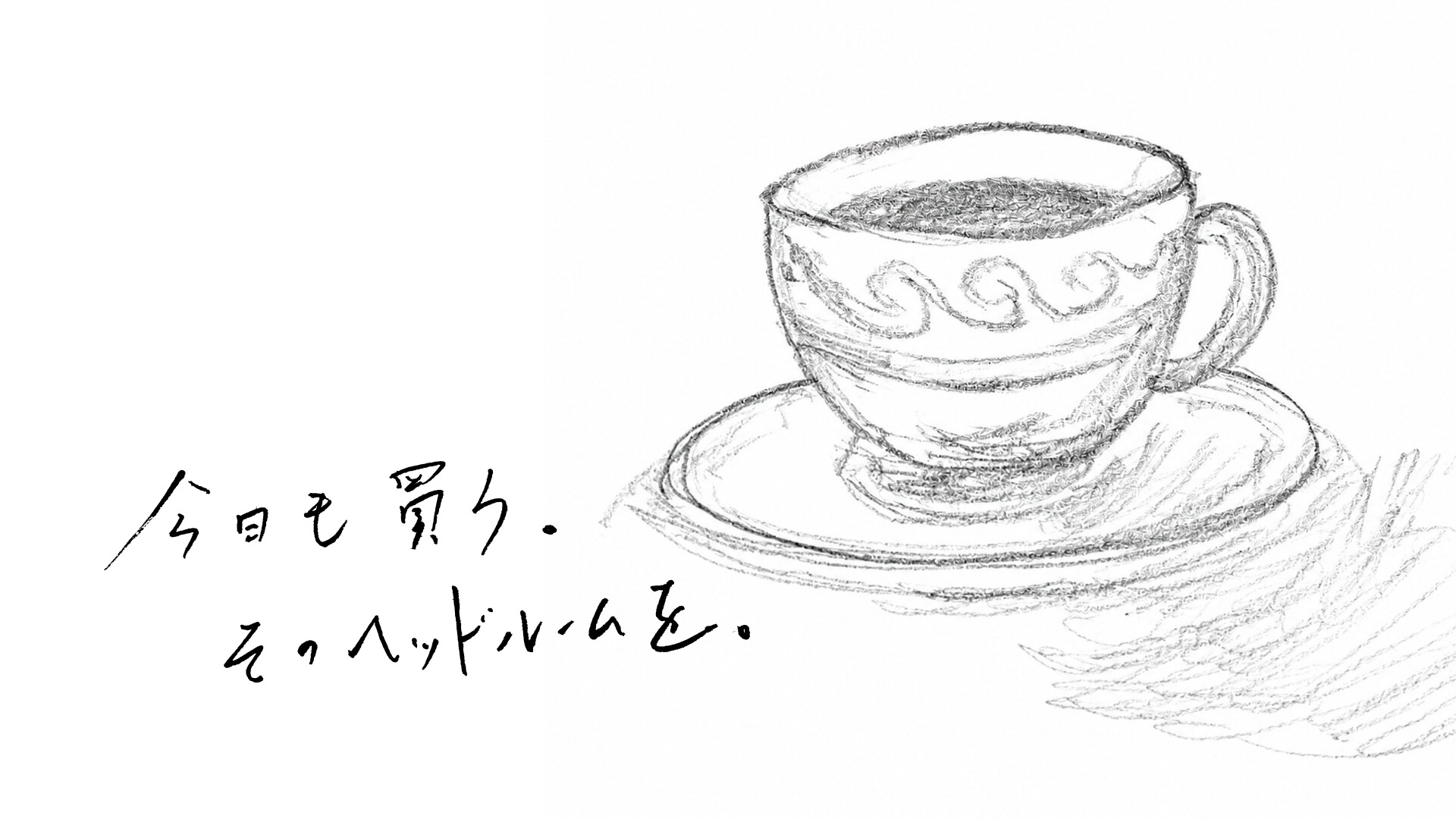
Before long, their blends arrived. White cups, small saucers, sugar, and milk. The same arrangement as before.
After placing the cups down, Yoshioka noticed that Saeki’s bag was wet from the rain.
“Wipe the bottom with this. If you put it on the floor, it’ll get wet again.”
He brought a dry cloth from the counter and placed it on the table.
“Sorry.”
“Give it back when you leave.”
“This isn’t an exception?” Saeki asked while wiping the bottom of her bag.
“I refused the egg.”
“Giving me the cloth adds work.”
“But it didn’t change the order of the shop.”
Mizuno drank the coffee. It had the same bitterness and heat as before. He did not need to concentrate in order to find the taste. For a body that had walked through the rain, that was enough.
At the counter, an elderly man had spread a newspaper sideways. When its edge came close to the cup of the customer beside him, Yoshioka placed a small board from the shelf next to the man.
“Put the paper here. You can spread it out.”
“That stand wasn’t here before.”
“It’s the board the magazines were on.”
“Can I just use it?”
“It belongs to the shop.”
He had not created a new product or a special seat for reading the newspaper. He had only moved a board already in the shop. When the man shifted the paper onto it, more room opened between the page and the neighboring cup, and Yoshioka immediately returned to the kitchen.
The rain grew stronger, and more streams of water ran down the window. Then the bell at the entrance rang.
An elderly woman entered and struggled to fit her umbrella into the stand.
“Don’t leave it outside. The wind will take it.”
Yoshioka stopped what he was doing and took the umbrella from her.
“No cane today?”
“I forgot it.”
“You shouldn’t forget it.”
“If I went home for it, I’d get wet again.”
There were still no empty seats, but the man reading the newspaper had begun to pay.
“That one’s opening now. Don’t hurry.”
Yoshioka finished the man’s payment, wiped the chair, and waited until the woman sat down. During that time, the coffee brewing stopped.
“He stopped the process just now,” Saeki said.
“Yeah.”
“But he refused the egg.”
Adding an egg would push back the waiting time of every customer present. If the same order continued, it would become a new menu item. But if he hurried a woman without her cane, sitting down at all would be difficult.
They looked like the same kind of exception, but they were not the same to Yoshioka.
Once the woman settled, he placed water in front of her.
“Coffee?”
“Yeah. The usual.”
That was the whole order.
Changing a seat. Handing over one cloth. Moving a board for a newspaper. Waiting briefly for someone to sit.
All were actions adjusted to a customer’s condition, but they left different amounts of work in the shop.
“If he accepted the egg, the work afterward would increase,” Mizuno said.
“Cook it. Use a plate. Wash it. Delay the next order.”
“If he served one person first, the order would break too,” Saeki added.
“But changing a seat or handing over a cloth is almost finished on the spot.”
“It doesn’t leave work afterward.”
“It doesn’t increase stock or the menu.”
Watch the audience. But do not hand the center of the story to the audience.
Ichifune’s words overlapped the shop in front of them.
Yoshioka was also watching the room. He did not miss wet clothes and bags, the spread of the newspaper, or whether a customer could reach a seat. At the same time, he did not hand the order of service or the process the kitchen could handle to the customers.
“It’s kindness, but the shop doesn’t break,” Mizuno said.
“Kindness that doesn’t break the shop,” Saeki repeated.
When two customers paid one after another, someone waiting near the entrance took the open seat. Yoshioka cleared the cups, wiped only what needed wiping, and moved to the next order.
It was not that he changed nothing. But the order of the shop as a whole did not break.
When the rain weakened and the number of customers fell slightly, Saeki returned the cloth she had borrowed.
“Thank you.”
“Did the bag dry?”
“Yes.”
Mizuno asked Yoshioka, “You refuse customer requests sometimes.”
“I do.”
“But refusing doesn’t mean you aren’t watching them.”
“What are you talking about?”
“You refused the egg. But you paid attention to the seat and the bag.”
“If I listened to everything, the shop wouldn’t run,” Yoshioka answered quickly. “But if I noticed nothing, there’d be no reason to come here. There are other places to get coffee.”
“Have you decided how far you’ll respond?” Saeki asked.
“Less about deciding than whether it increases.”
“What increases?”
“The work left afterward.”
Yoshioka indicated the plate of the customer who had asked for the egg.
“Add one egg, and the cooking, the plate, and the washing all increase. If other people start ordering it, it becomes a menu item.”
Then he lifted the cloth Saeki had returned.
“This only adds one thing to the laundry.”
“So one thing does increase.”
“Of course. There’s hardly any kindness that adds nothing.”
Yoshioka laughed.
“But you can’t add so much that the shop stops running. People come here for a break. If I make them wait, or what we do changes every time they come, it won’t be a break.”
What Yoshioka protected was not the efficiency of the process itself.
Someone could sit quietly, drink something warm, rest for a while, and leave. Sometimes he added work for that. Sometimes he refused a request in order to protect the same condition.
“You don’t improve everything that could be improved,” Mizuno said.
“You can’t do everything,” Yoshioka answered, and began washing the next cup.
Mizuno and Saeki paid 900 yen for the two blends and left the shop.
The rain had nearly stopped. Only the water remaining along the edge of the road trembled thinly whenever a car passed. On the way to the station, Saeki wrote the day’s notes into her phone.
Do not improve everything.
Choose the places where the customer strongly feels value.
Place surplus there, within a range that does not break the operation.
“Are you going to name it again?” Mizuno asked.
“Not yet.”
“Does that mean the cloth was included in the 450 yen?”
“I don’t think it was the cloth itself,” Saeki answered.
“It was the room to notice the customer’s condition.”
As they descended the station stairs, the sound of rain disappeared and the announcement of an arriving train came closer.
The egg that had been refused. The order that had not been changed. The seat away from the air conditioner. The cloth handed to a wet bag.
There had not been a large amount of kindness.
Yoshioka had not done everything he could for any one person. The shop had enough time to see the customers, and on the customer’s side there was a place where it was slightly easier to stay than 450 yen had led them to expect.
← Previous: Chapter 11 — The Same Shop, Different Customers

Back to the English Contents

Next: Chapter 13 — A Plan That Reduces Added Value →

この章を日本語で読む