
## Chapter 10: Where Does the Value Remain?
On Monday morning, Manager Kuroda entered the meeting room and immediately asked, “Can this be done in five minutes?”
The message Mizuno had sent said only:
I would like your opinion on the continuity of a small-scale business.
He had not prepared materials, but Saeki had made a simple table just before the meeting. The work that arose after a booklet sold was listed on the left, and Kubo’s proposed changes on the right.
Kuroda looked at the amount of paper.
“Doesn’t look like five minutes.”
“Sorry.”
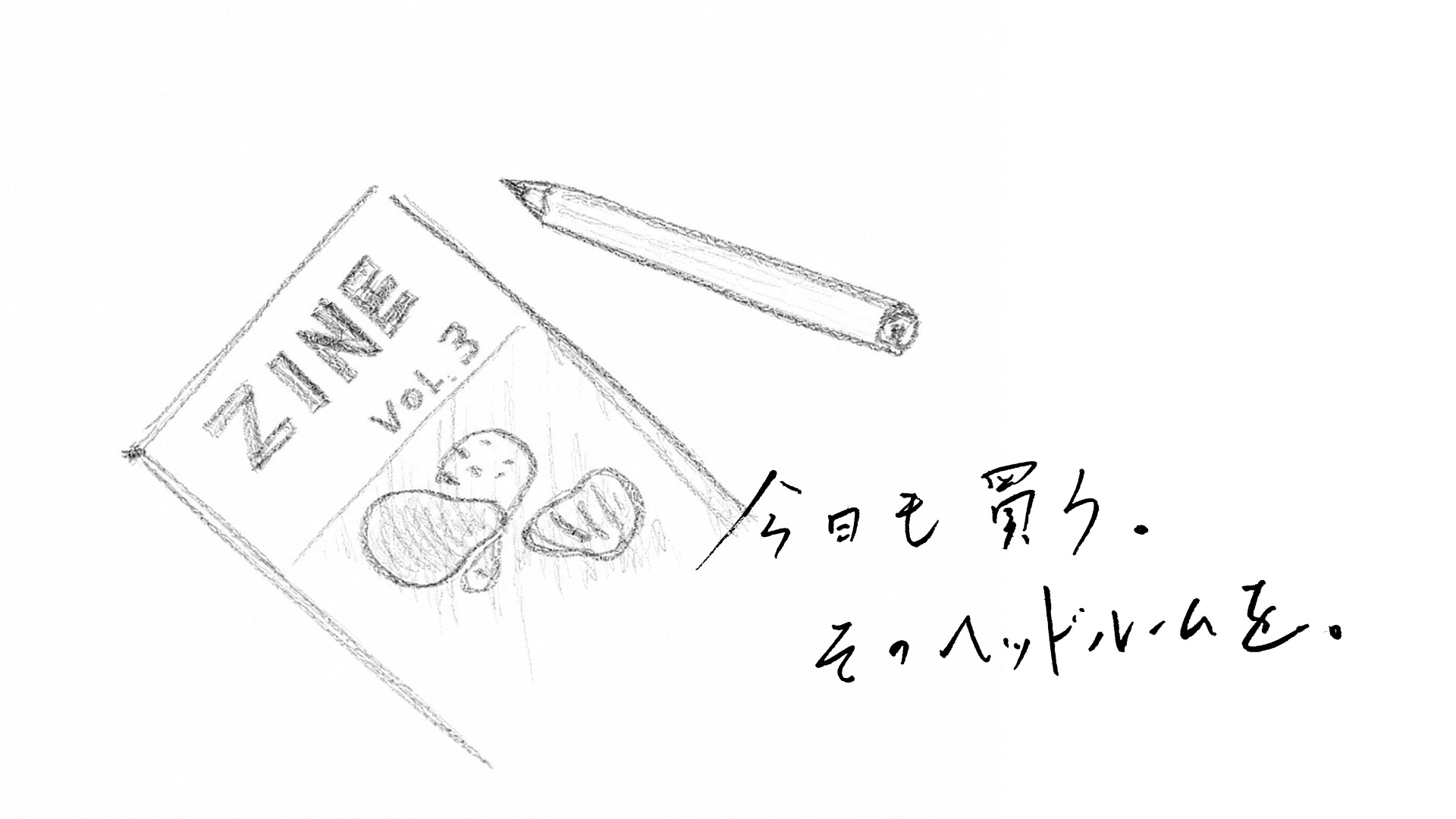
“What’s a zine?”
“A small booklet made by an individual,” Saeki explained.
“This maker writes the pieces and also handles the printing and sales himself.”
“What does that have to do with our work?”
He was not reprimanding them. Kuroda wanted to know the use of the discussion before listening to it.
“We don’t know yet whether it does,” Mizuno said.
“But I kept thinking about the fact that selling more made it harder for him to write the next one.”
“Selling made him unable to write?”
“He had more orders to check, more printing, binding, packing, and shipping. Each copy costs 300 yen, so it’s easy to try even if you don’t know the writer. In exchange, every copy sold adds to his own work.”
“It sold because it was cheap.”
“I don’t think the price was the only reason. But it was important as an entrance.”
“He does all of it alone?”
“For now.”
Kuroda continued reading down the left side of the table. “What does he want to do?”
“He says he wants to write.”
“So the work of selling is eating the time for writing.”
After coming home from work, Kubo processed the orders. Only after that day’s shipping and binding were done did he try to write. On days when he managed to begin, it was around eleven at night.
“If it doesn’t sell, that’s a problem. If it sells, he can’t write. Either way, he runs out of the next product.”
“Sales are consuming his production capacity,” Saeki said.
“Revenue increases while the capacity to create value decreases.”
“What about profit?”
Mizuno could not answer Kuroda’s question.
“I didn’t ask for exact numbers.”
“You can’t know whether it will continue without looking at that. Sell one copy, subtract the paper, printing, fees, and shipping. How much remains? Add his time and it gets smaller again.”
“Yes.”
“I’m not saying 300 yen is bad. If there’s a system that makes a profit at 300 yen, that’s fine. But if he sends one 300-yen product every day, one copy at a time, the time won’t add up.”
The first thing Kuroda checked was not the reputation of the booklet or the quality of the writing. After one copy sold, how did money and time move? As a result, could the next copy be made?
“He decided to batch shipping twice a week,” Mizuno said.
“That’s good.”
“He’ll standardize the binding method and page count. Sell previous issues as a set. Center sales on events. There’s also a proposal to set the release date only after the text is complete.”
“Did he think of those?”
“Yes.”
“A person knows his own work best. The dangerous thing is looking from outside and thinking you understand all of it.”
Mizuno had been able to see that Kubo was losing time. But Kubo knew better which tasks could be combined and what speed would feel to readers like being kept waiting.
“What is bothering you, Mizuno?”
Mizuno read the two lines he had written the day before.
There is still room in the customer’s payment.
The provider’s time is pressed against the upper limit.
“That it can’t continue if only the buyer has it easy.”
“Obviously.”
“Yes. But I think I had assumed that the more you gave the buyer beyond the price, the better the business became.”
“‘Give more’ is vague.”
“Have them receive more value than the amount they paid.”
“Who pays for the difference?”
Mizuno had no answer.
“Improve the materials. Add more work. Keep the price down. The customer may be pleased. But if the company or the people doing the work bear that difference, it won’t last.”
“In Kubo’s case, it’s his time,” Saeki said.
“Right. If the more pleased the customer is at 300 yen, the less he can sleep, that isn’t surplus. You only moved it somewhere else.”
The room left on the customer’s side was being taken from the provider’s side. The total amount of room had not increased. Only the location of the burden had changed.
“Then where should the value come from?”
“You’re asking me that?”
“As an opinion.”
“Depends on the business. Some businesses use equipment. Some depend on procurement. Some sell a person’s skill.”
Kuroda did not try to give them an answer that applied everywhere.
Saeki placed *Between Transfers* on the table. It was Kubo’s booklet, which she had borrowed from Mizuno earlier.
“Where is the value in this booklet?”
“I haven’t read it. I don’t know,” Kuroda answered immediately.
“Mizuno?” Saeki asked.
Mizuno looked at the booklet.
“The writing.”
“Not the paper?”
“The paper is necessary, but I didn’t buy it because it was that paper.”
“The staples?”
“They only need to hold while I’m reading.”
“The clear bag?”
“I wouldn’t have trouble without it.”
“Then the center that creates value is Kubo’s ability to write.”
Observing. Putting things into words. Shaping them into short pieces. What had remained after Mizuno paid 300 yen had not come from the whiteness of the paper or the transparency of the bag.
“Does that ability decrease when one copy sells?”
Paper, ink, and envelopes decreased. Shipping took time. But the ability to write did not pass to the reader and disappear from Kubo.
“No. If he writes, it may even grow.”
“The experience of writing remains. So does learning readers’ responses and thinking about the next expression,” Saeki continued.
Kuroda read several pages of the booklet.
“It’s good if the source of the value gets stronger every time he sells.”
“The source of the value,” Mizuno repeated.
“You could call it the cause that produces value,” Saeki said.
In an empty section of the table, she made two columns.
What remains inside after delivery.
Writing skill. Observation. Editing methods. Understanding readers. Trust in previous issues.
What is consumed outside with each delivery.
Paper. Ink. Envelopes. Shipping. Sales fees. Packing time.
“I don’t think there are many businesses where nothing is consumed outside. Products need materials and logistics. Coffee uses beans. Even rakugo uses venue fees and travel time.”
“The difference is how much of what produces the value remains for the next time?” Mizuno asked.
“Yes.”
“By inside, do you mean inside the company?” Kuroda asked.
“Not only the company. It can mean an individual or a team.”
“What about equipment?”
“If you own it and can use it next time, it’s close to something that remains inside. But if nothing can be done without the equipment, there is also dependence on it.”
“You should separate that.”
Saeki added the headings “Accumulation” and “Consumption” to the two columns.
If Kubo could secure time to write, new pieces would be created, and the experience would remain with him. If his readers increased, trust in his name and earlier issues would build as well. The next time he released a booklet, he would no longer be a completely unknown writer.
On the other hand, time spent shipping and binding did not necessarily lead to the next piece. If it only increased the same work, the more he sold, the less time he had to write.
“If more remains inside, is it easier to continue?”
“I think it’s one condition,” Saeki answered.
“But it won’t continue for that reason alone,” Kuroda said before she could continue.
“There are jobs where the skill improves but no money remains. Without demand, whatever remains inside won’t make it a business.”
At the edge of the table, Saeki added:
Check separately from profit and demand
“Better not to explain everything with one number. But it can be useful as a place to look.”
Kuroda’s words did not reject the table. But neither did he agree that a neat classification was enough to make a business move.
“Can it be a ratio?” Mizuno asked.
“An exact number would be difficult.”
“But as a concept, there is a ratio?”
“I think there is.”
Saeki wrote at the top of the table:
Internal asset ratio
“A working name.”
“Another long phrase.”
“Shortening it creates more misunderstandings.”
When Kuroda checked the time, nearly twenty minutes had passed since the meeting began.
“Five minutes was impossible.”
“Sorry.”
“If Kubo wants to continue at 300 yen, he has to build a way of selling at 300 yen. Not fill the discount with his own time.”
Before standing, Kuroda pushed the table back toward Mizuno.
“After you sell, watch what remains.”
“For the customer?”
“For both.”
When the meeting-room door opened, the sounds of office phones and keyboards returned. Kuroda went back to his desk and immediately began another call.
Mizuno compared the booklet with the two columns and wrote in his notebook:
Value remains with the customer.
The source that creates value remains with the provider.
Below that, he added:
Internal asset ratio
The sound of the air conditioner remained in the meeting room, and Kuroda’s voice could be heard beyond the door. Even if something accumulated inside, profit and demand would not follow automatically.
Outside the two columns, other conditions for continuing the business still remained.
← Previous: Chapter 9 — After It Sold for 300 Yen

Back to the English Contents

Next: Chapter 11 — The Same Shop, Different Customers →

この章を日本語で読む